
Aerosol Research Test Bench
Rapid Development of a Modular Research Test Bench
An interdisciplinary research system developed for controlled experiments involving test aerosols and airflow. The IMEE scope included system concept and architecture, mechanical and pneumatic design, component and material selection, subsystem integration, rapid prototyping and engineering documentation.
The project combined an extensive concept and engineering phase with a highly compressed implementation schedule. The result was a functional, modular research test bench that was delivered to the client, accepted and successfully deployed in experimental work. The design focused on repeatable testing, serviceability, rapid development, modular architecture and future system expansion.
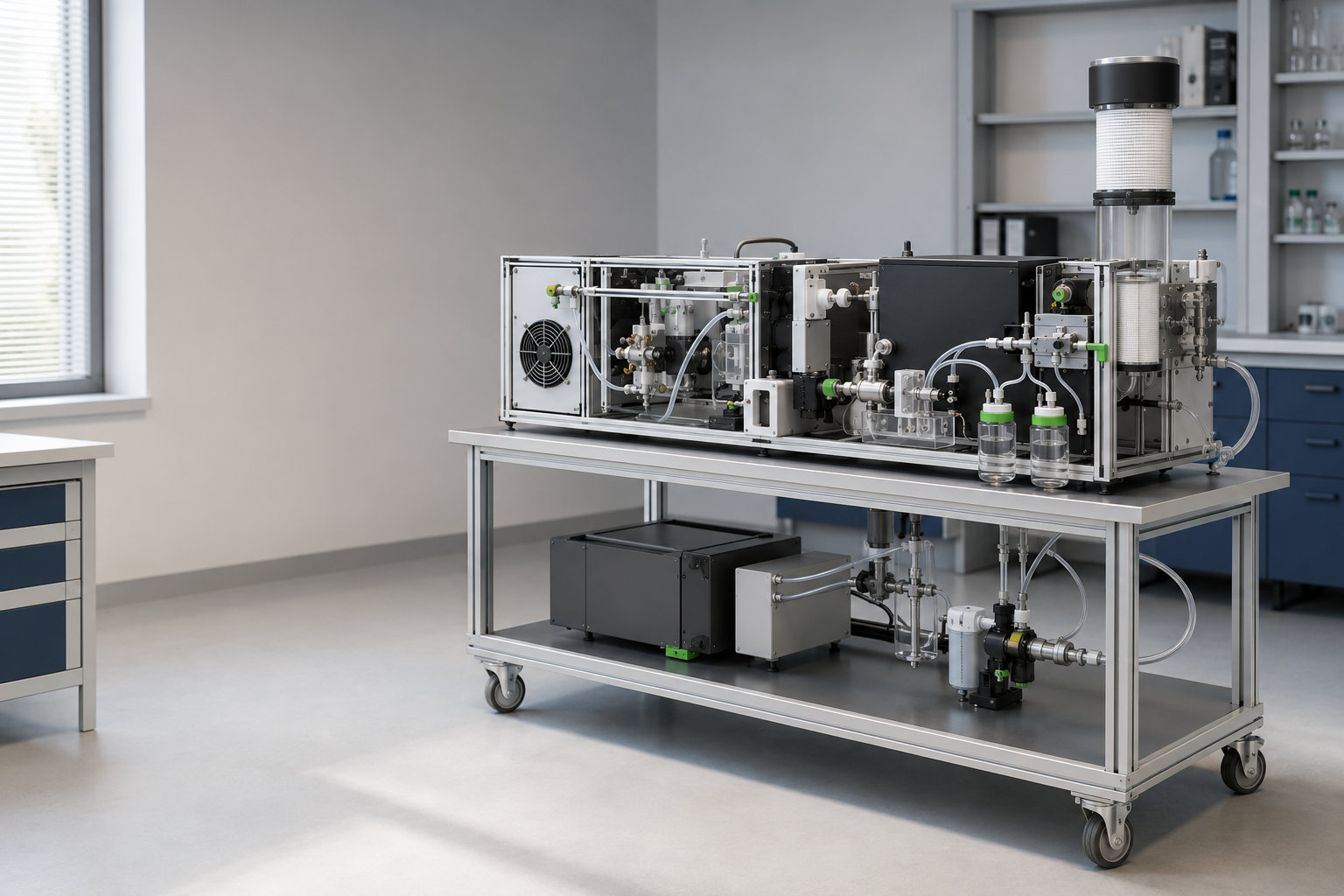
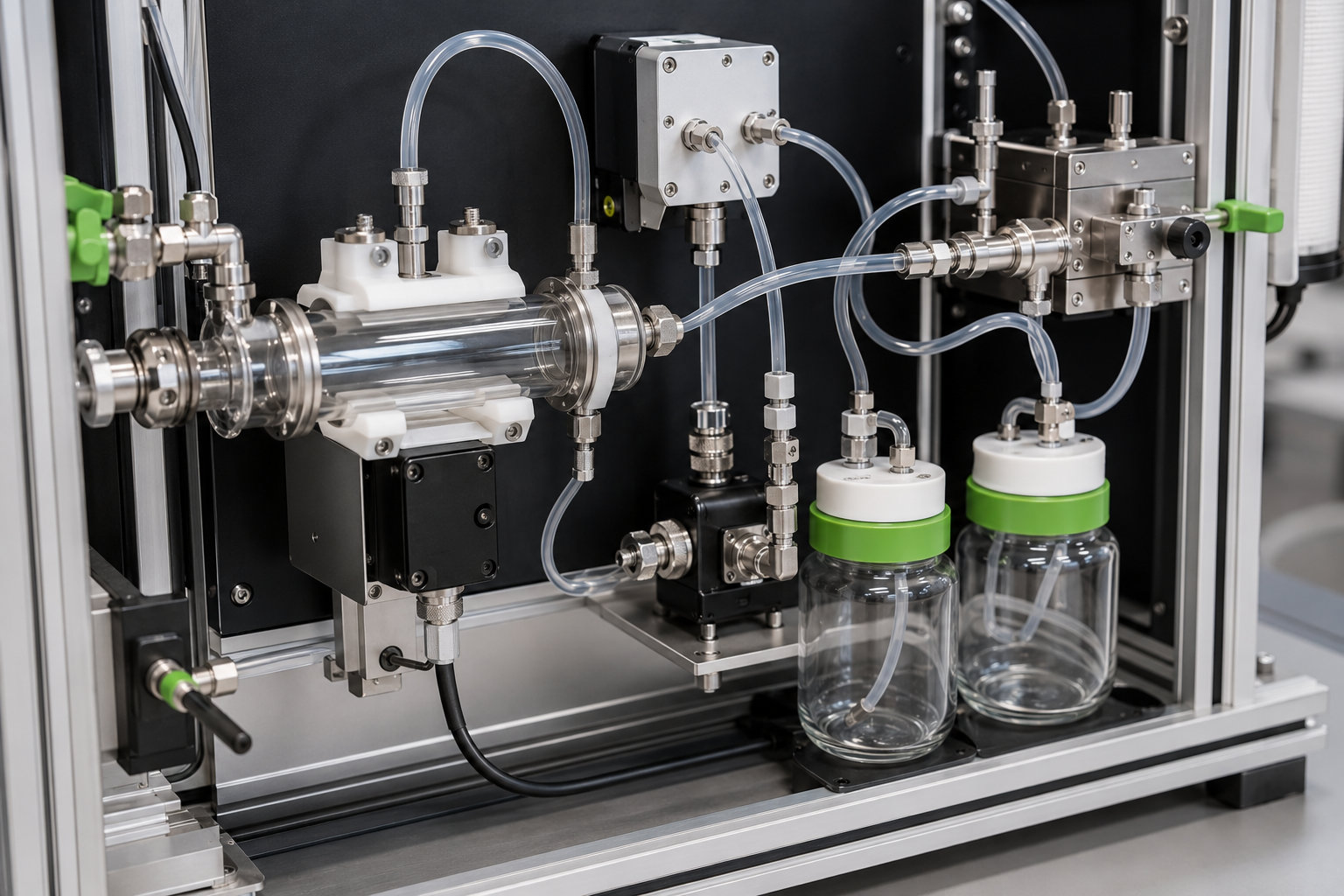
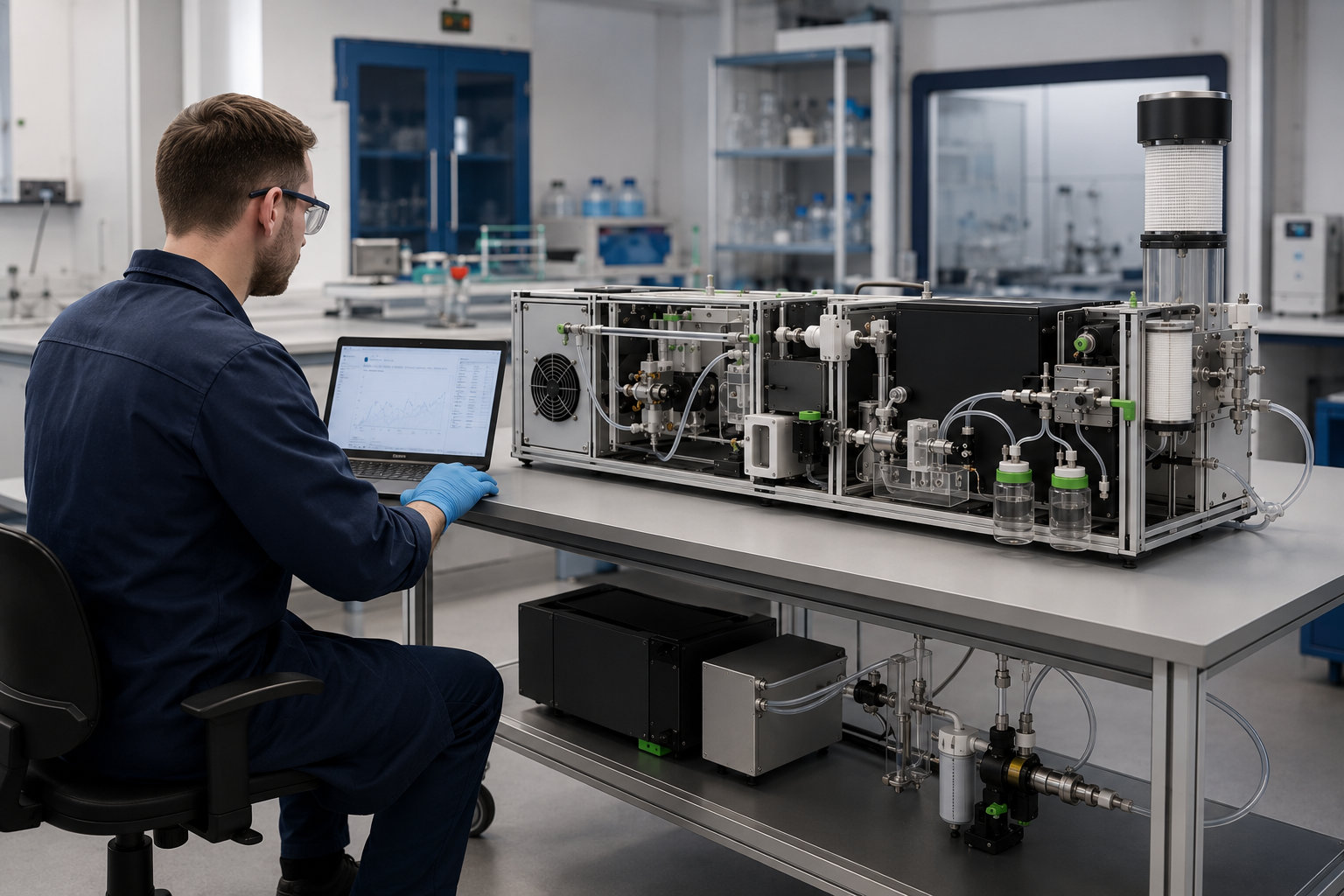
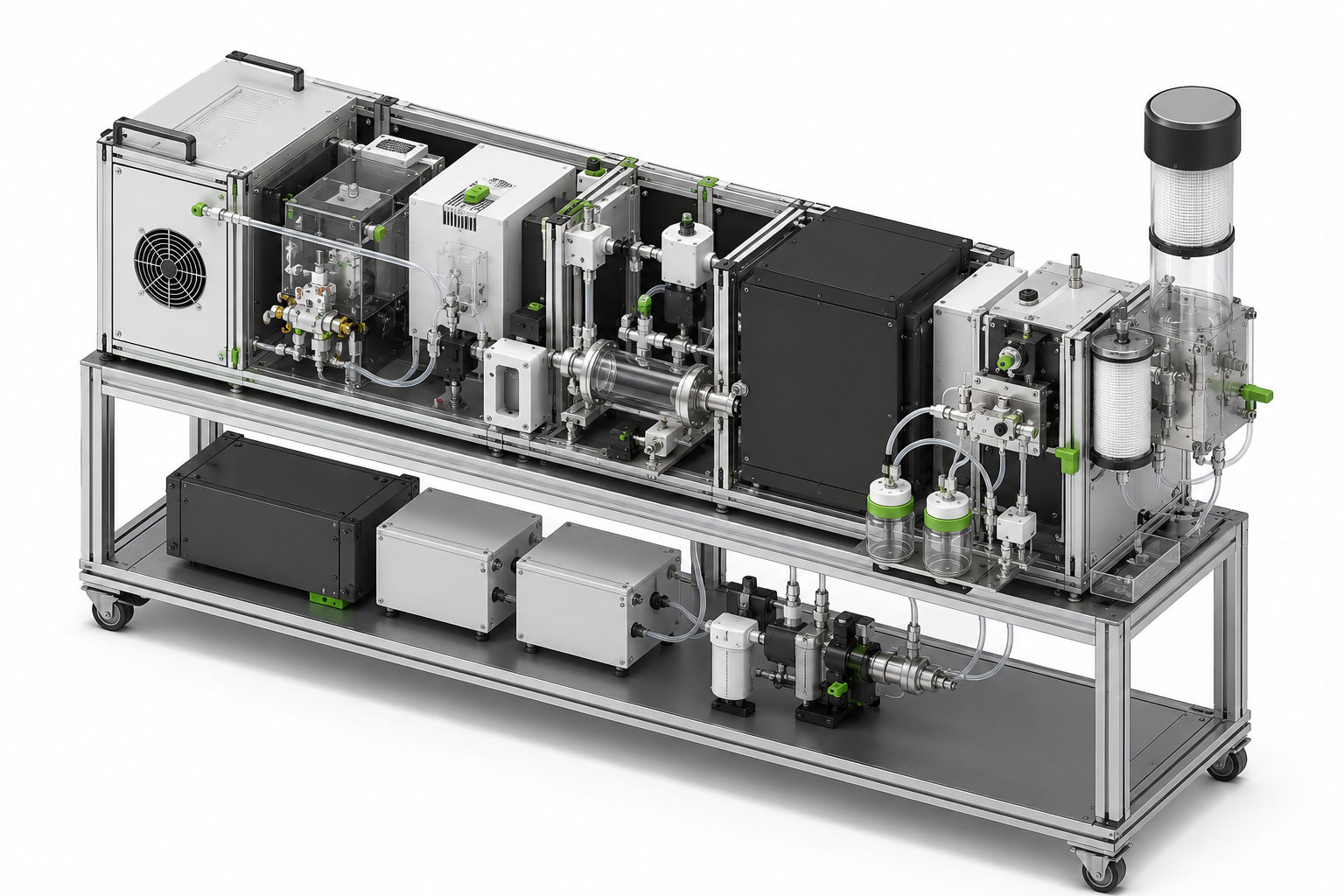
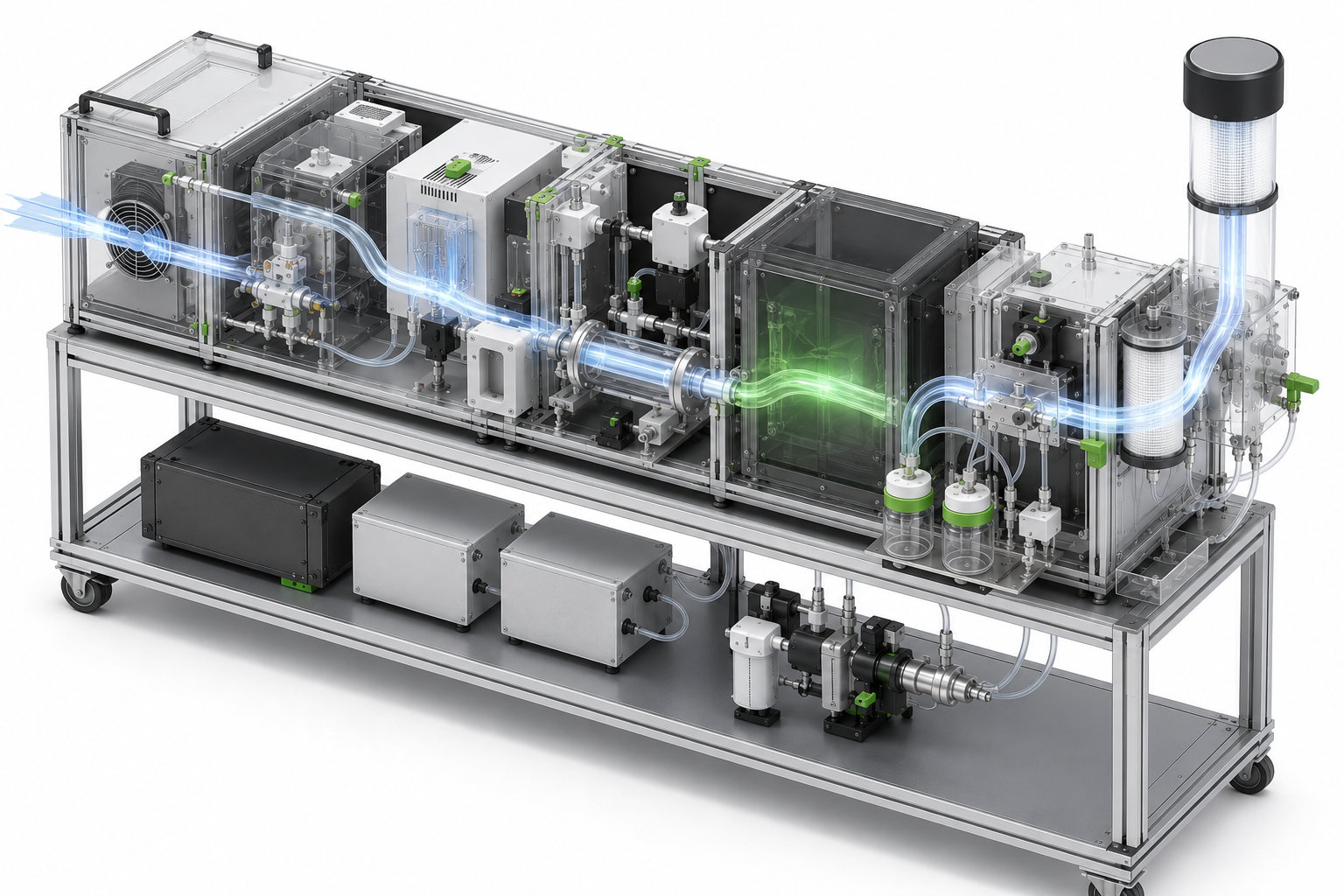
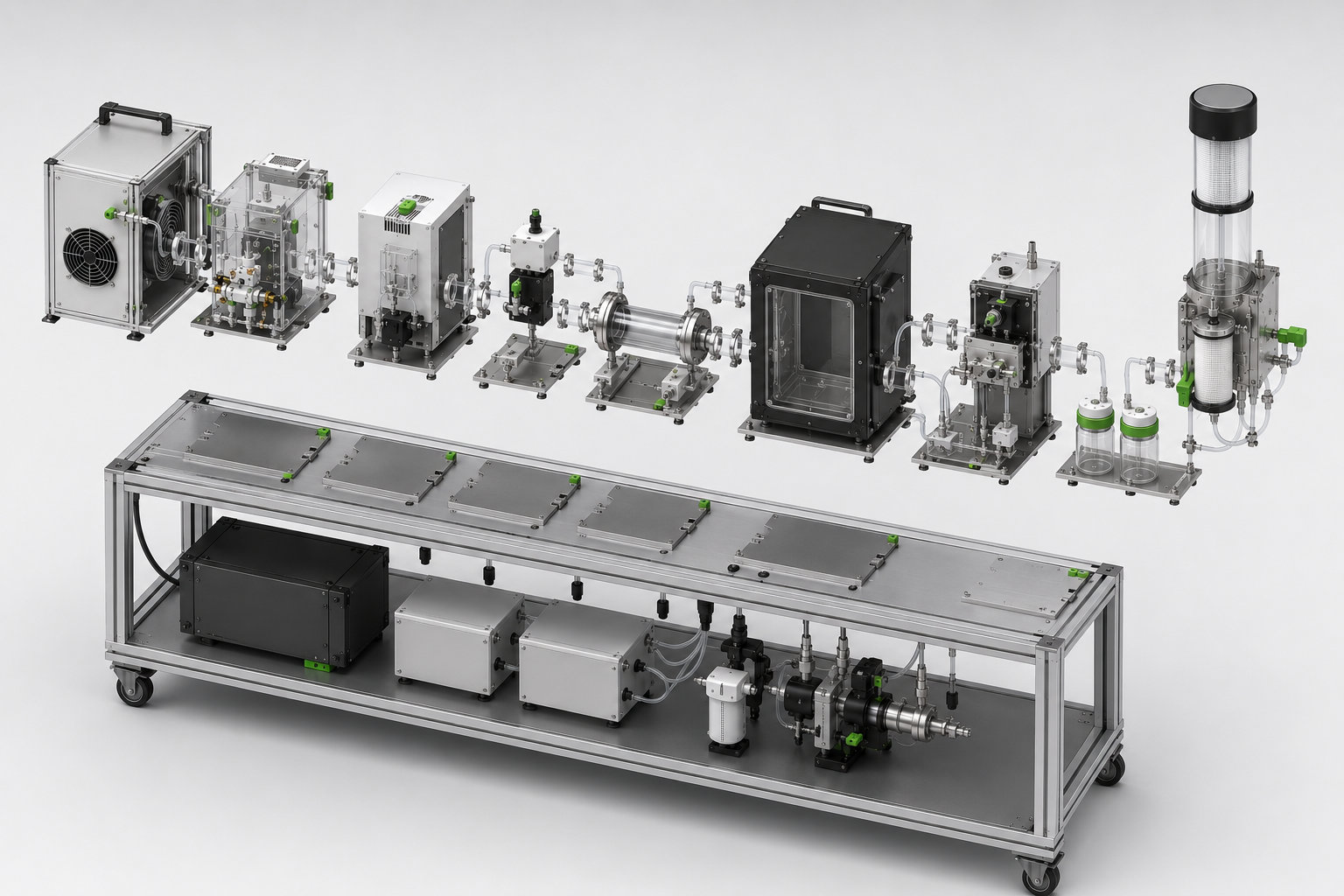
Due to confidentiality, we do not publish technical parameters, schematics, client information or research results. The images shown are independent concept visualisations illustrating the nature of the engineering work, not technical documentation of the delivered device.
Technical ChallengeDevelop a single safe and serviceable research system capable of providing controlled and repeatable conditions for airflow, medium conditioning, exposure and sampling. |
IMEE ScopeDevelopment of the system concept and architecture, mechanical and pneumatic design, component and material selection, subsystem integration, rapid prototyping and engineering documentation. |
Delivered OutcomeA functional modular research test bench was completed, delivered to the client, accepted and subsequently used in experimental research. |
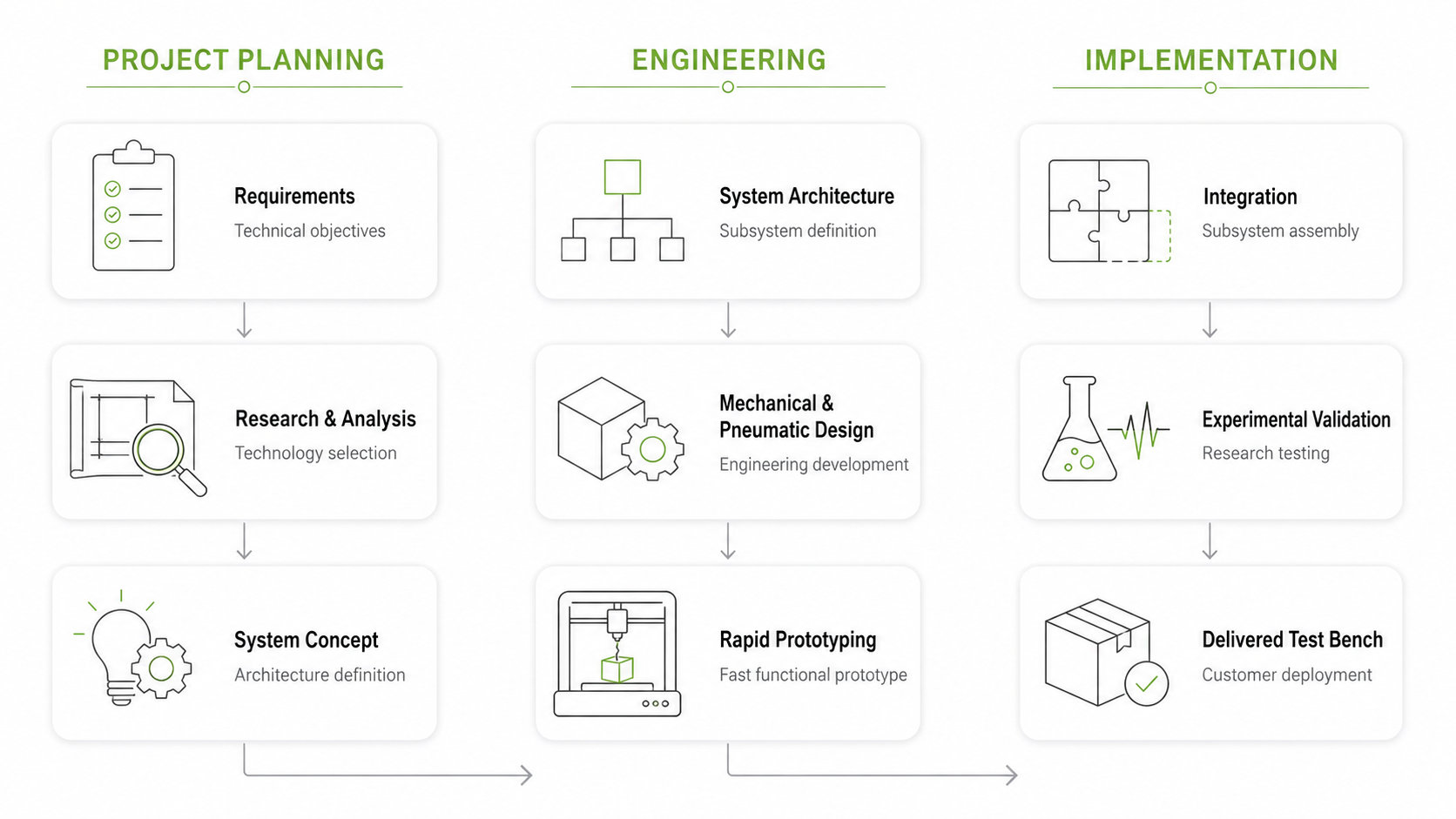
Engineering PreparationThe implementation was preceded by an extensive concept phase covering system planning, technology selection, technical risk identification and definition of the key engineering solutions. |
Rapid Development and PrototypingThe physical implementation was completed within a compressed schedule. Additive manufacturing and rapid design iterations were used where they could shorten development cycles, reduce fabrication time and accelerate integration. |
Modular ArchitectureThe system was divided into functional modules to simplify integration, reconfiguration, maintenance and further development of the research platform. |
Subsystem IntegrationMechanical, pneumatic, measurement and supporting functions were combined into one coordinated research platform with clearly defined interfaces between the main modules. |
Repeatability and ServiceabilityThe design supported stable and repeatable experimental conditions while providing practical access to components for operation, maintenance and replacement during research work. |
Designed for ExpansionThe architecture allowed additional functions, sensors and experimental modules to be introduced without redesigning the complete installation. |
Concept Visualisations of the System
The images illustrate the general modular architecture, organised flow path and integration of research functions. They do not reproduce confidential dimensions, parameters or manufacturing details.
Need a custom laboratory test system?
Let's discuss your engineering challenge.
DISCUSS YOUR PROJECTEngineering design, research and development, prototyping and optimisation of technical systems. Research test benches, electric machines and drives, and solutions for specialised applications.